
How do you choose a Child Resistant Packaging Company?
Child-resistant packaging is designed to make access more difficult for children while remaining reasonably usable for the intended adult user. It is commonly used for products that could present a health or safety risk if accidentally accessed by young children.The design can involve closures, bottles, jars, pouches, cartons, blister packs, or other packaging formats. 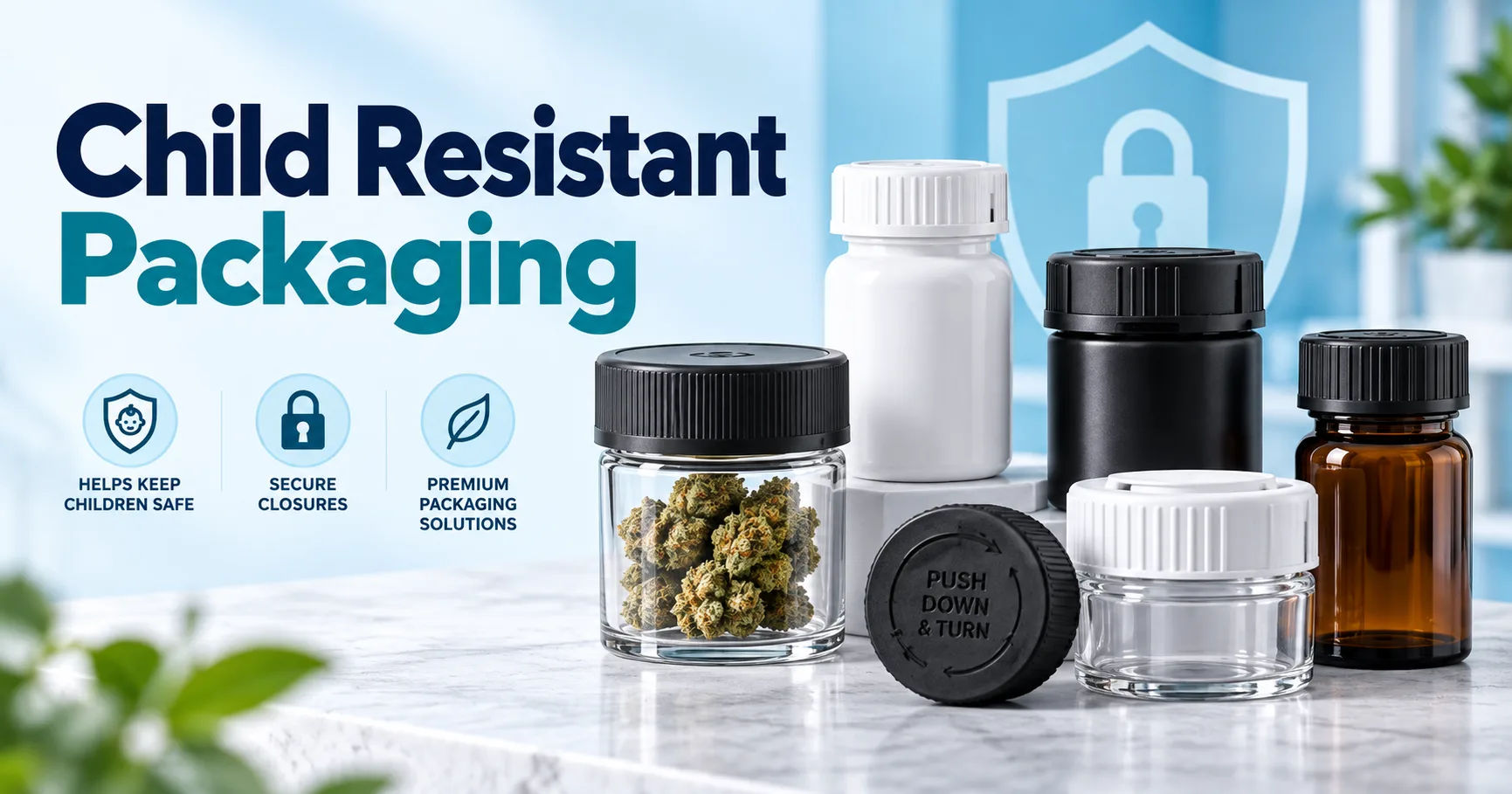 The exact solution depends heavily on what is being packaged.
A company selling supplements may need a different solution from a manufacturer packaging household chemicals. Likewise, pharmaceutical products can have requirements that differ from consumer goods.
This is why selecting a Child Resistant Packaging Company should begin with understanding your own packaging requirements rather than simply searching for the lowest quotation.
Identify the Product First
Start by documenting what you need to package.
Consider the product's physical characteristics, size, weight, chemical properties, moisture sensitivity, and potential hazards. Think about whether it is liquid, powder, cream, tablet, capsule, or another form.
The packaging must protect the product while also providing the required level of child resistance.
Consider How Consumers Will Use It
Child-resistant packaging should not create unnecessary difficulty for adults.
A closure that is extremely difficult for everyone to open may technically create a barrier, but it can produce complaints and poor user experiences.
Good packaging balances resistance to unintended access with reasonable adult usability.
Check Regulatory and Testing Experience
One of the first questions to ask a potential supplier is whether it understands the regulations and testing requirements relevant to your market.
Child-resistant packaging is not simply a matter of adding a complicated cap. Certain packaging systems are evaluated using standardized procedures to determine whether they provide the required level of protection.
The applicable standard depends on the country, product category, and packaging type.
A reliable supplier should be able to explain which testing requirements apply to your product and what documentation will be provided.
Ask About Applicable Standards
Do not accept vague statements such as "our packaging is child safe."
Ask for specific information about the standard or testing protocol used.
Depending on the market and product, requirements can involve child-resistance testing, adult-use testing, package integrity testing, leak testing, or other performance evaluations.
The supplier should explain which requirements apply rather than expecting you to figure everything out independently.
Request Test Documentation
Ask whether the exact packaging configuration has been tested.
This distinction matters.
A supplier might have tested one bottle and closure combination, while your proposed product uses a different bottle, liner, closure, or dispensing mechanism.
Testing information should correspond as closely as possible to the package you intend to sell.
Evaluate Packaging Design Capabilities
A strong supplier should be able to help with design instead of merely selling an existing component.
Packaging design involves more than appearance. The closure, container, liner, dimensions, material, dispensing system, and labeling surface all need to work together.
Look at Different Closure Options
Common child-resistant designs can include push-and-turn closures, squeeze-and-turn systems, special dispensing mechanisms, and other engineered access barriers.
The appropriate design depends on the product and the intended user.
Ask the supplier to explain the advantages and limitations of each option.
Consider Packaging Materials
Materials can influence durability, compatibility, appearance, recyclability, and production cost.
Plastic may offer flexibility and impact resistance, while glass can provide a different combination of chemical resistance, appearance, and weight.
The supplier should understand how the material interacts with your product rather than recommending a material simply because it is commonly used.
Examine Product Compatibility
Packaging should be compatible with the product throughout its expected shelf life.
This is particularly important for products that contain oils, solvents, active ingredients, fragrances, acids, or other substances that could interact with packaging components.
Compatibility problems may affect the container, closure, liner, seal, or product itself.
Ask About Stability Testing
Find out whether the supplier can support appropriate compatibility or stability testing.
Questions may include whether the package can tolerate temperature changes, humidity, transportation, repeated opening, and prolonged contact with the product.
A package that performs well during a short demonstration may behave differently after months of storage.
Pay Attention to Seals and Liners
The closure is only one component of the packaging system.
Liners and seals can influence leakage, contamination protection, freshness, and product stability.
Ask how the complete package is evaluated rather than looking at the child-resistant mechanism in isolation.
Review Manufacturing Quality
Once you have established that a design is appropriate, examine how consistently the supplier can manufacture it.
Packaging components often need to perform within tight dimensional and functional tolerances. Small variations can affect how a closure fits or operates.
A capable Child Resistant Packaging Company should have documented quality-control procedures covering incoming materials, production, inspection, and finished goods.
Ask About Quality Control
Ask what the company checks during manufacturing.
Useful areas include dimensions, closure torque, seal performance, material consistency, visual defects, and functional operation.
The exact checks will vary by packaging type.
The important point is that quality should be built into the production process rather than discovered only after products reach your warehouse.
Investigate Production Capacity
A supplier may perform well on small orders but struggle when your business grows.
Ask about minimum order quantities, normal production capacity, lead times, production scheduling, and expansion capabilities.
If your product succeeds, you should not immediately need to replace your packaging supplier because the original company cannot support higher volumes.
Evaluate Prototyping and Sampling
Never choose a packaging supplier based solely on photographs or product descriptions.
Request physical samples whenever possible.
Samples allow you to examine the closure, feel the materials, test dispensing, evaluate labeling, and identify practical problems before committing to production.
Test With Real Product
If possible, test the actual product in the proposed packaging.
A container can behave differently when filled with a real formulation.
Check whether the product leaks, sticks to surfaces, reacts with materials, affects seals, or becomes difficult to dispense.
This stage can prevent expensive mistakes later.
Test Repeated Opening and Closing
Consumers may open packaging many times.
Repeated use can affect threads, hinges, seals, and closure mechanisms.
Testing should therefore reflect realistic consumer behavior rather than a single opening cycle.
Examine Adult Usability
Child resistance is important, but adult usability should not be ignored.
Older consumers and people with limited hand strength may struggle with certain mechanisms. Packaging can also become more difficult to use when hands are wet, oily, or otherwise compromised.
A responsible supplier should understand that usability is part of the overall packaging experience.
Conduct Practical User Testing
Consider testing samples with representative adult users.
Observe whether people understand how the package works without extensive instruction.
Pay attention to confusion, excessive force, awkward movements, and repeated failed attempts.
These observations can reveal problems that technical specifications alone do not show.
Compare Customization Options
Your packaging may need specific colors, dimensions, branding, printing, labeling surfaces, or dispensing features.
Ask what can be customized and what requires a new mold or tooling investment.
Tooling Costs
Custom packaging can require molds, specialized components, or engineering work.
Ask for a clear explanation of tooling costs before approving a design.
Also find out who owns the tooling and what happens if you later change suppliers.
This is an easy detail to overlook during initial negotiations.
Check Decoration and Labeling Support
Some suppliers provide packaging components only. Others can support printing, labeling, decoration, or assembly.
Determine where each stage will happen.
A supplier that offers more services is not automatically the right choice, but understanding the complete production chain makes cost and scheduling easier to evaluate.
Consider Supply Chain Reliability
Packaging delays can stop an otherwise finished product from reaching customers.
For that reason, supplier reliability deserves as much attention as the package itself.
Ask where materials are sourced, where manufacturing takes place, and how the supplier handles shortages.
Review Lead Times
Get realistic lead-time information for both standard and customized products.
Ask about:
-
Sample production
-
Tooling
-
First production runs
-
Repeat orders
-
Shipping
-
Quality inspections
-
Emergency requirements
A supplier should distinguish between estimated lead times and guaranteed commitments.
Ask About Inventory Programs
For businesses with predictable demand, inventory arrangements can sometimes reduce the risk of stockouts.
Discuss whether the supplier maintains finished inventory or raw materials for regular customers.
Make sure any such arrangement is clearly documented.
Compare Pricing Carefully
Price matters, but packaging cost should not be evaluated as a single number.
A low unit price may exclude tooling, testing, setup, printing, freight, inspection, or other charges.
Calculate the Total Cost
Request a detailed quotation.
Consider the complete cost from development through delivery.
You should also consider the financial consequences of defective packaging, delays, product leakage, recalls, or changing suppliers later.
The cheapest quotation is not necessarily the lowest total cost.
Investigate Customer Support
Packaging development often involves technical questions and adjustments.
You want to know who will answer those questions when something goes wrong.
A good supplier should provide clear communication throughout development, testing, production, and delivery.
Identify Your Main Contact
Ask whether you will have a dedicated account manager, engineer, or technical representative.
Find out how quickly the company normally responds to problems.
Also ask what happens when your primary contact is unavailable.
Simple communication problems can become expensive when production schedules are tight.
Check References and Reputation
Before entering a major agreement, research the supplier's history.
Look for evidence of experience with packaging similar to yours.
Customer reviews can provide useful clues, but references from relevant businesses can be even more informative.
Ask for Relevant Case Studies
Request examples involving similar packaging challenges.
For example, if you need a child-resistant bottle for a liquid product, a supplier's experience with a similar format may be more useful than experience producing ordinary cosmetic jars.
Ask what problems occurred during development and how they were resolved.
Review Documentation and Traceability
Good packaging suppliers should maintain appropriate documentation for their manufacturing processes and materials.
Depending on the product, you may need specifications, certificates, test reports, batch information, material information, or quality records.
Ask How Problems Are Investigated
No manufacturing operation is completely free from problems.
What matters is how problems are detected, contained, investigated, and corrected.
Ask about procedures for handling defective batches and customer complaints.
A mature quality system should provide a clear process for identifying the cause of an issue and preventing unnecessary recurrence.
Consider Sustainability Without Ignoring Safety
Sustainability is becoming increasingly important in packaging decisions.
However, environmental goals should not undermine necessary product protection or child resistance.
Look at material reduction, recyclability, recycled content where appropriate, package weight, transportation efficiency, and end-of-life considerations.
Avoid Green Claims Without Evidence
Ask suppliers to explain environmental claims with measurable information.
Terms such as "eco-friendly" can mean very different things.
A supplier should be able to explain what material changes actually reduce environmental impact and whether those changes affect package performance.
Watch for Warning Signs
Some supplier behaviors deserve closer examination.
Be cautious when a company refuses to provide meaningful technical information, gives unclear testing answers, changes specifications without explanation, or makes unrealistic delivery promises.
Another warning sign is excessive focus on price while avoiding questions about quality and compliance.
You should also be cautious if samples perform inconsistently or if the supplier cannot explain who is responsible for testing.
A professional Child Resistant Packaging Company should be comfortable discussing limitations as well as strengths.
Create a Supplier Comparison Process
After collecting information, compare suppliers using the same criteria.
Instead of looking at price first, consider regulatory knowledge, testing, design capability, material compatibility, quality control, production capacity, lead times, customization, documentation, support, and total cost.
This makes the decision more structured.
Ask the Same Questions
Give each shortlisted supplier the same basic requirements.
Ask for samples, specifications, testing information, pricing, lead times, minimum order quantities, and customization details.
Consistent questions make differences between suppliers much easier to identify.
Test Before Making a Large Commitment
A small production trial can provide valuable information.
Evaluate actual packaging performance, production consistency, delivery reliability, and communication.
The trial should give you evidence about how the supplier performs in practice rather than relying entirely on sales presentations.
Build a Long-Term Supplier Relationship
Choosing packaging is rarely a one-time decision.
Your product may change. Regulations may change. Volumes may increase. New markets may require additional testing.
A supplier that can work with you through those changes can be more useful than one that only provides a standard package.
Discuss Future Development
Ask whether the supplier can support new sizes, closures, materials, or packaging formats.
You do not need to commit to future products, but understanding the supplier's capabilities can help with long-term planning.
Conclusion
Choosing a Child Resistant Packaging Company requires more than comparing unit prices and selecting an attractive container. The right decision depends on how well the supplier can meet your product's safety, regulatory, technical, quality, usability, and supply requirements.
Start by defining exactly what your product needs. Then investigate applicable standards and testing requirements. Review the supplier's design experience, material knowledge, manufacturing controls, and ability to provide appropriate documentation.
Physical samples should be an important part of the evaluation. Test the package with the actual product whenever practical, examine repeated use, and consider how easily adults can operate the closure.
Cost should also be viewed in terms of total ownership rather than the quoted price alone. Tooling, testing, freight, defects, delays, and future production requirements can all affect the real cost.
Most importantly, choose a supplier that communicates clearly and can explain both the strengths and limitations of its packaging. A reliable Child Resistant Packaging Company should treat safety and performance as engineering requirements, not simply marketing features.
Taking time to evaluate suppliers before placing a major order can reduce costly packaging problems later. The goal is to establish a packaging system that protects the product, helps reduce unintended child access, works for intended adult users, meets relevant requirements, and remains dependable as your business grows.