
How long does countertop installation Jacksonville FL take?
Installing new countertops is an exciting way to improve the appearance, functionality, and value of your kitchen or bathroom. However, one of the most common questions homeowners ask before starting the project is how long the entire process will take. The timeline depends on several factors, including the countertop material, size of the space, preparation requirements, and complexity of the installation. 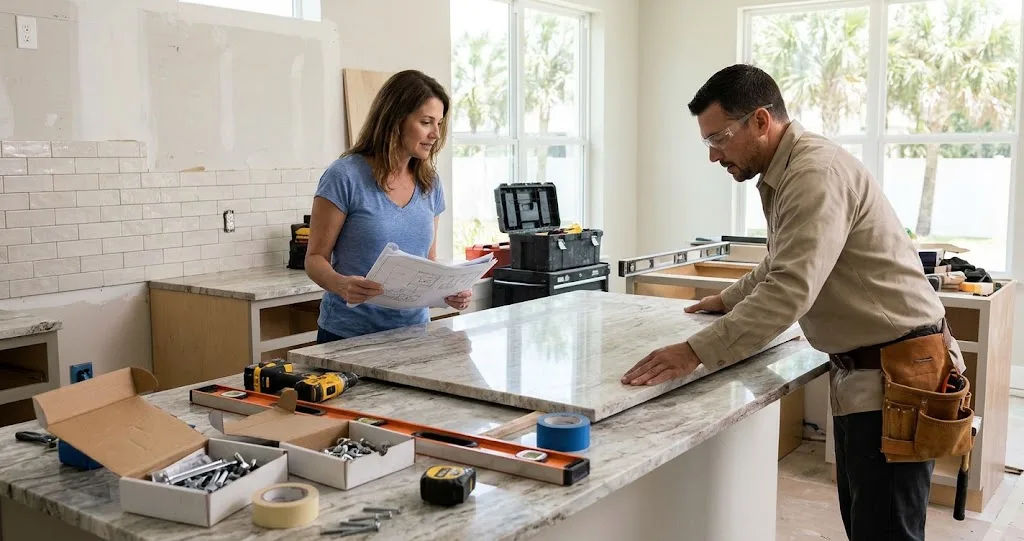 Understanding the expected schedule for countertop installation Jacksonville FL can help homeowners plan their renovation without unnecessary stress or delays.
Some countertop projects can be completed in a single day, while others require several days or even a few weeks from the initial measurement to the final installation. For example, replacing an existing countertop with a standard-sized prefabricated option may take less time than installing custom granite or quartz countertops that require detailed fabrication.
Knowing what happens during each stage makes it easier to understand why installation schedules vary. This guide explains the typical timeline, important preparation steps, material-related differences, possible delays, and practical ways to make the project run smoothly.
What Is the Typical Timeline for Countertop Installation?
Most countertop installation Jacksonville FL require more time than the actual work performed inside the home. Although professional installers may complete the physical installation in several hours, the complete process includes consultation, measurements, material selection, fabrication, transportation, and finishing.
For many residential projects, the overall timeline ranges from one to three weeks. However, complicated projects or specialty materials may require additional time.
Here is a general breakdown of the process:
|
Installation Stage |
Estimated Time |
|---|---|
|
Initial consultation |
1–2 days |
|
Material selection |
1–3 days |
|
Professional measurements |
1–2 hours |
|
Fabrication |
5–10 business days |
|
Removal of existing countertops |
2–5 hours |
|
New countertop installation |
3–8 hours |
|
Final inspection and cleanup |
1–2 hours |
These estimates are general guidelines rather than guaranteed schedules. Availability of materials, contractor workloads, and project complexity can affect the actual completion date.
How Long Does the Actual Installation Take?
The physical installation is usually much faster than the entire renovation process.
A small kitchen countertop may take approximately three to five hours to install. Larger kitchens with multiple sections, islands, or complicated layouts may require six to eight hours or longer.
Bathroom countertops generally take less time because they cover smaller areas. A straightforward bathroom installation may be completed within two to four hours.
However, these estimates assume that the cabinets are ready, measurements are accurate, and the new countertops have already been fabricated.
How Does Countertop Material Affect Installation Time?
The material you choose is one of the biggest factors influencing the project schedule. Different countertop surfaces require different fabrication methods, preparation techniques, and installation procedures.
Understanding these differences can help you select an option that fits your design preferences and renovation timeline.
Granite Countertops
Granite is a popular natural stone because of its durability, attractive appearance, and unique patterns.
However, granite countertops require careful cutting, polishing, and edge preparation. Each slab has natural variations, so professional fabricators must inspect the material and determine how to position it correctly.
The fabrication process commonly takes five to ten business days, depending on the supplier and project requirements.
Once fabrication is complete, installation generally takes four to eight hours for an average-sized kitchen.
Larger granite countertops may require additional workers and specialized equipment because natural stone slabs can be extremely heavy.
Quartz Countertops
Quartz is an engineered stone that offers a consistent appearance and a wide range of colors and patterns.
Its manufacturing process combines natural quartz particles with resins and pigments. Professional fabricators cut the material according to the kitchen measurements and prepare openings for sinks, faucets, and appliances.
Quartz fabrication usually takes approximately five to ten business days, although custom designs may require longer.
The installation itself often takes four to eight hours for a standard kitchen.
Quartz is especially attractive to homeowners who want a modern appearance without the natural variations found in granite.
Marble Countertops
Marble provides an elegant appearance with distinctive veining and natural color variations.
However, marble requires careful handling because it can scratch, chip, or stain more easily than some other countertop materials.
Fabrication may take five to ten business days or longer, depending on the design and availability of the selected slab.
Professional installers must pay close attention to seams, edges, and cutouts to achieve an attractive finish.
Laminate Countertops
Laminate countertops are often quicker to install than natural stone surfaces.
Many laminate products are available in standard sizes, reducing the amount of custom fabrication required.
For straightforward projects, installation may take approximately two to five hours.
If the countertop needs custom cutting or special edge treatments, additional preparation time may be necessary.
Laminate can be a practical choice for homeowners who want an affordable renovation with a relatively short installation schedule.
Butcher Block Countertops
Butcher block countertops bring warmth and natural character to kitchens.
Installation time depends on the wood species, countertop dimensions, and finishing requirements.
Standard butcher block sections may be installed within three to six hours. Custom pieces may require additional cutting, sanding, sealing, and fitting.
Some finishes also need drying time before the countertop is ready for regular use.
What Are the Different Stages of Countertop Installation?
Understanding each stage helps explain why a countertop project may take several days even when the actual installation is completed in one afternoon.
1. Initial Consultation and Planning
The process begins with a consultation between the homeowner and the countertop contractor.
During this stage, the installer discusses the project's requirements, preferred materials, design preferences, budget, and expected schedule.
The contractor may also inspect the existing kitchen or bathroom to identify potential challenges.
For example, uneven cabinets, plumbing complications, or unusual countertop shapes may require additional preparation.
This stage usually takes one to two days, depending on appointment availability and how quickly the homeowner makes decisions.
2. Choosing the Countertop Material
Material selection is another important part of the schedule.
Homeowners should consider durability, maintenance, appearance, and cost before making a decision.
Some materials are readily available, while others may need to be ordered from a supplier.
Specialty colors, unusual patterns, and imported stone can increase waiting times.
Selecting the material early helps prevent unnecessary delays once measurements and fabrication begin.
3. Professional Measurements and Templating
Accurate measurements are essential for a successful installation.
Professional installers measure the cabinets, walls, countertop depth, and areas where sinks or cooktops will be placed.
For custom stone countertops, fabricators often create a physical or digital template to ensure that every section fits correctly.
This process generally takes one to two hours for a typical kitchen.
However, larger kitchens with islands, corners, and unusual layouts may require additional time.
Accurate templating reduces the possibility of fitting problems during installation.
4. Countertop Fabrication
Fabrication is often the longest stage of the entire process.
After measurements are approved, the selected material is cut according to the countertop design.
Fabricators also prepare sink openings, appliance cutouts, edges, and other custom details.
Granite, quartz, and marble require specialized cutting and polishing equipment.
A standard fabrication schedule may take five to ten business days. More complicated designs can take longer.
Homeowners should confirm the expected completion date with their contractor before scheduling the installation.
5. Removing Existing Countertops
Before installing the new surface, the existing countertop usually needs to be removed.
This involves carefully separating the old countertop from the cabinets without damaging surrounding walls or cabinetry.
The contractor may also need to disconnect the sink, faucet, garbage disposal, and other attached components.
A straightforward removal generally takes two to five hours.
However, older kitchens may present additional challenges if countertops are heavily attached or plumbing connections are difficult to access.
Proper preparation helps protect the cabinets and creates a clean surface for the new countertop.
6. Installing the New Countertop
This is the stage when the new countertop is transported into the home and positioned on the cabinets.
Installers carefully align each section, check the fit, and secure the material according to manufacturer recommendations.
For larger kitchens, multiple pieces may need to be joined with carefully matched seams.
The installer also checks that the countertop is level and that edges align properly.
Most standard kitchen installations take approximately three to eight hours.
7. Sealing, Finishing, and Cleanup
Some countertop materials require additional finishing after installation.
Natural stone surfaces may need sealing, depending on the stone and manufacturer's recommendations.
Installers also inspect seams, polish appropriate edges, remove excess adhesive, and clean the work area.
This stage may take one to two hours, although certain finishing products require additional curing time.
What Factors Can Delay Countertop Installation?
Even when a contractor provides an estimated completion date, unexpected circumstances can affect the schedule.
Knowing the most common causes of delays helps homeowners prepare for possible changes.
Cabinet Problems
Countertops depend on stable and properly aligned cabinets.
If the cabinets are damaged, uneven, or incorrectly installed, the contractor may need to correct these issues before placing the new surface.
Cabinet repairs can add several hours or even several days to the project.
Custom Designs and Complicated Layouts
A simple rectangular countertop is generally easier to fabricate than a kitchen with several corners, curved edges, or multiple islands.
Custom backsplashes, waterfall edges, and unusual cutouts also require additional work.
These details may extend the fabrication schedule.
Material Availability
Not every countertop material is immediately available.
A specific granite slab, quartz color, or imported marble variety may need to be ordered.
Shipping delays and supplier availability can affect the overall timeline.
Homeowners should ask whether their chosen material is currently in stock.
Plumbing and Electrical Adjustments
Replacing countertops can affect existing plumbing and electrical connections.
For example, installing a new sink may require adjustments to drain connections or faucet openings.
Cooktop installations may also require professional electrical or gas work.
These additional services should be coordinated before the countertop installation date.
Weather and Transportation Issues
Weather conditions can sometimes affect material transportation and delivery schedules.
In Jacksonville, heavy rain and severe storms may disrupt deliveries or make transportation more difficult.
Because stone countertops are heavy and require careful handling, contractors may reschedule delivery when conditions are unsafe.
How Can Homeowners Prepare for a Faster Installation?
Proper preparation can make the project more organized and reduce unnecessary delays.
A few simple steps can help the contractor complete the work efficiently.
Clear the Kitchen or Bathroom
Remove dishes, small appliances, decorations, and other belongings from the countertops.
Clear nearby cabinets if the contractor needs access to plumbing or supporting structures.
Keeping the workspace open allows installers to move materials safely.
Disconnect Appliances and Plumbing
Ask your contractor which appliances and plumbing fixtures need to be disconnected before installation.
Depending on the project, a licensed plumber or electrician may need to handle certain connections.
Do not attempt complicated utility work without the necessary knowledge and qualifications.
Complete Cabinet Work Beforehand
If you are also replacing or repairing cabinets, complete that work before the countertop installation.
Cabinets should be properly secured, level, and ready to support the new surface.
Scheduling cabinet and countertop work in the correct order prevents repeated adjustments.
Confirm Material and Measurements
Before fabrication begins, verify the selected material, color, edge profile, sink placement, and other design details.
Reviewing these details early helps prevent mistakes that could require new fabrication.
Arrange Access for Installation Workers
Make sure installers can access the home, kitchen, driveway, and installation area.
Move furniture or other obstacles that may interfere with transporting large countertop sections.
If the property has restricted parking or building access, communicate those details beforehand.
Does Countertop Installation Require Time Before Using the Surface?
Yes, some countertops need additional time before homeowners can use them normally.
Although the surface may look finished immediately after installation, adhesives, sealants, and other materials may require curing time.
The waiting period depends on the countertop material and products used.
Granite and Marble
Natural stone countertops may require sealing depending on their porosity and the specific stone.
If a sealer is applied, follow the manufacturer's instructions regarding drying and curing.
Avoid placing food, liquids, or heavy objects on the surface until the installer confirms that it is ready.
Quartz
Quartz generally does not require routine sealing.
However, adhesives used for seams and other installation details may need time to cure.
Ask the installer when the countertop can safely handle normal use.
Laminate
Laminate countertops are often ready for use relatively quickly after installation.
However, adhesives and other finishing materials may require additional drying time.
Follow the contractor's recommendations before using the sink or placing heavy appliances on the surface.
Butcher Block
Wood countertops may require special finishing oils or protective sealants.
Depending on the product, these finishes can need several hours or longer to dry.
Some finishing products require multiple applications, which may extend the preparation period.
How Much Time Should You Set Aside for the Entire Project?
If you are planning a kitchen renovation, it is helpful to think about the complete project rather than focusing only on installation day.
For a standard residential kitchen, homeowners should generally allow one to three weeks from the initial consultation to the completed installation.
Here is an example of how a typical schedule might look:
|
Project Activity |
Example Schedule |
|---|---|
|
Consultation and planning |
Day 1 |
|
Material selection |
Days 2–3 |
|
Measurements and templating |
Day 4 |
|
Fabrication |
Days 5–14 |
|
Existing countertop removal |
Day 15 |
|
New countertop installation |
Day 15 |
|
Final inspection |
Day 15 or 16 |
This is only an illustrative schedule. Actual timelines depend on contractor availability, material selection, fabrication capacity, and project requirements.
For a simple replacement using readily available materials, the process may be shorter.
For custom stone countertops or extensive kitchen renovations, the project may take several weeks.
What Questions Should You Ask Your Countertop Installer?
Before scheduling the project, ask your contractor a few important questions.
Clear communication helps establish realistic expectations and prevents misunderstandings.
How Long Will Fabrication Take?
Ask for an estimated fabrication completion date.
This helps you understand when the new countertop will be ready for delivery and installation.
Is the Material Available?
Confirm whether the selected material is in stock or needs to be ordered.
If it requires shipping, ask how that affects the expected installation date.
How Long Will Installation Take?
Request an estimate based on your kitchen's size and layout.
A contractor should explain whether the work can be completed in one day or requires multiple visits.
Will Plumbing or Electrical Work Be Necessary?
Ask whether additional professionals will be needed to reconnect appliances, sinks, or other fixtures.
Understanding these requirements helps you coordinate the project properly.
Is Cleanup Included?
Confirm whether the installation team will remove old countertop materials, packaging, and construction debris.
Knowing what is included in the service helps you plan the remaining cleanup.
Is It Possible to Complete Countertop Installation in One Day?
Yes, the physical installation can often be completed in one day.
However, this does not mean the entire project begins and ends within 24 hours.
The countertop must usually be measured, fabricated, inspected, and transported before installation.
For example, a homeowner replacing an existing laminate countertop with a prefabricated option may have a relatively short schedule.
On the other hand, someone choosing custom granite or quartz will usually need to wait for fabrication.
A professional contractor can explain which stages can be completed quickly and which require additional time.
The most important consideration is not simply finishing quickly. It is ensuring that the countertop fits correctly, is securely supported, and has properly finished edges and seams.
Conclusion
Understanding how long countertop installation takes helps homeowners plan their renovation with realistic expectations. Although the actual installation may take only a few hours, the complete process involves several important stages, including consultation, material selection, professional measurements, fabrication, removal of existing surfaces, and final installation.
For most standard residential projects, the overall timeline is approximately one to three weeks. However, the schedule can vary depending on the countertop material, kitchen layout, custom design requirements, and availability of installers and supplies.
When planning countertop installation Jacksonville FL, homeowners should remember that granite, quartz, and marble generally require additional fabrication time, while laminate and certain prefabricated surfaces may offer faster installation options.
Preparation also plays an important role. Clearing the workspace, completing cabinet repairs, confirming measurements, and arranging necessary plumbing or electrical services can help prevent unnecessary delays.
Choosing an experienced contractor is equally important. A qualified professional can provide a realistic schedule, explain the installation process, identify potential problems, and ensure that the finished countertop meets the required standards.
Ultimately, a successful countertop project is about achieving the right balance between efficiency and quality. Giving installers enough time to measure, fabricate, and position the material correctly can help prevent costly mistakes and provide a beautiful, functional surface that lasts for years.